Course Introduction

EE BIOL C177/C234

Chuliang Song

Today’s Menu 🎯

  1. Why bother learning computing?
  2. What you’ll learn in this course
  3. Course plan overview

Course Info 📋

  • Where & When: Tuesdays & Thursdays, 11:00-11:50 AM, Haines 39
  • Office Hours: Tuesday, 3:00-4:00 PM, Botany Building 210H
  • Course Material: All materials are on the course website!
    • Follow along with interactive examples
  • The Workload: 2 Problem Sets & 1 Final Project
  • Your feedback is my compass 🧭: If I’m losing you, talking too fast, or just boring you—please speak up!

Why This Course?

Why Bother in the Age of AI?

  • You’re here to study biology, not CS
  • AI tools are powerful but not infallible
  • Understanding computing = steering the ship
  • Like learning a new language — with simpler grammar!

The AI Analogy 🍳

  • Relying on AI blindly = cooking from a recipe in a language you barely know
  • You might finish the dish…
  • But you’ll miss something critical
  • Computational literacy helps you catch when AI goes astray

What You’ll Learn

Six Pillars of the Course

  1. 🔧 Fluency with R
  2. 📊 Publication-ready figures
  3. 🧹 Data wrangling
  4. 📝 Scientific typesetting
  5. 🔁 Reproducible research
  6. 🤖 AI for research

Why R?

  • Not the fastest or most polished language
  • But it’s the lingua franca of ecology (and a large part of data science and statistics)
  • The tidyverse transformed R into something intuitive
  • If you want to access ecological tools → you need R

The Tidyverse Revolution

Base R: nested, hard to read

eat(dressed(shower(brush(wakeup(you)))))

Tidyverse: clear, logical flow

you |> 
  wakeup() |> 
  brush() |> 
  shower() |> 
  get_dressed() |> 
  eat() 

Publication-Ready Figures 📊

With ggplot2 you’ll create structured, beautiful visualizations
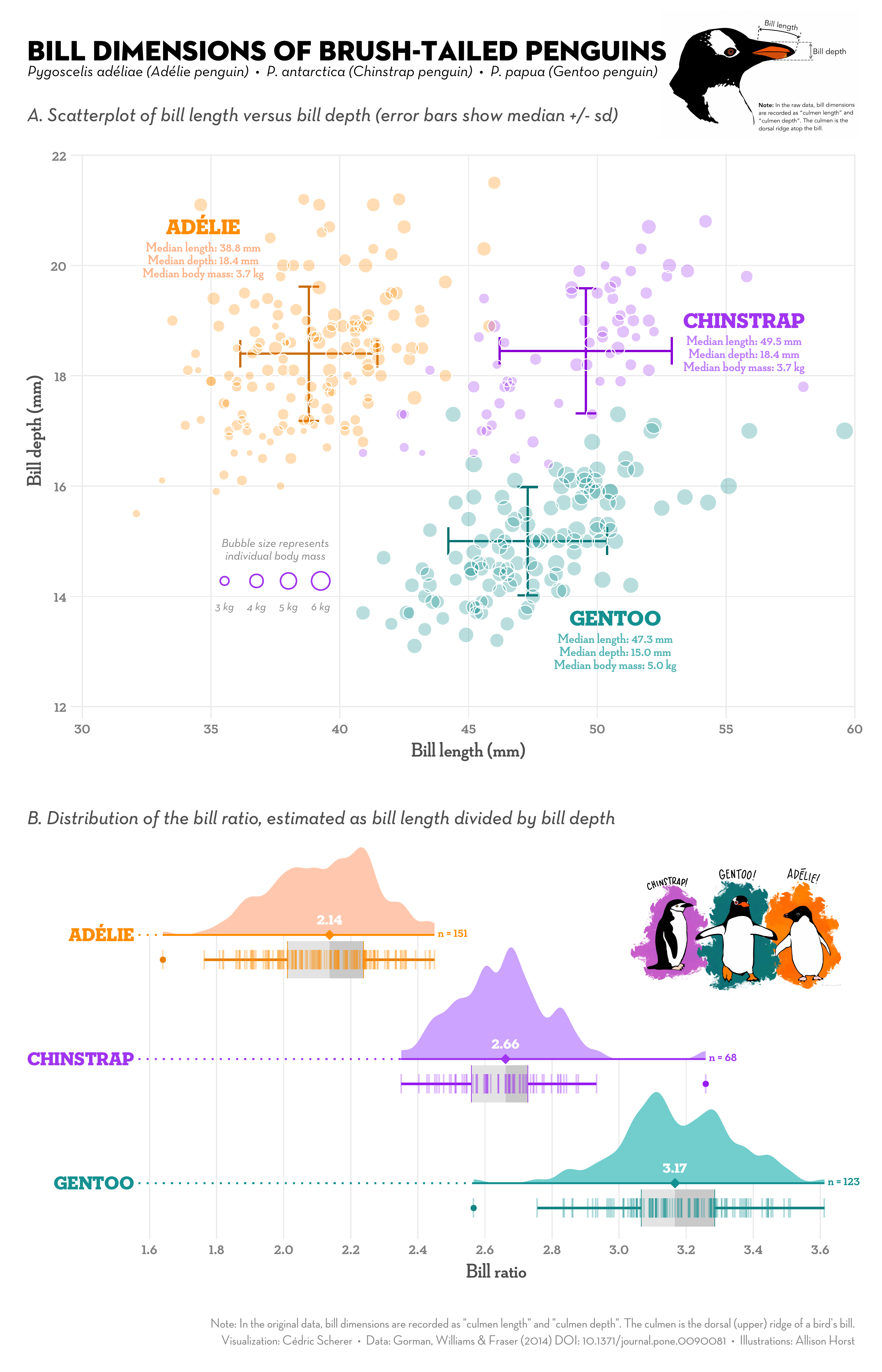
by Cédric Scherer

Scientific Typesetting 📝

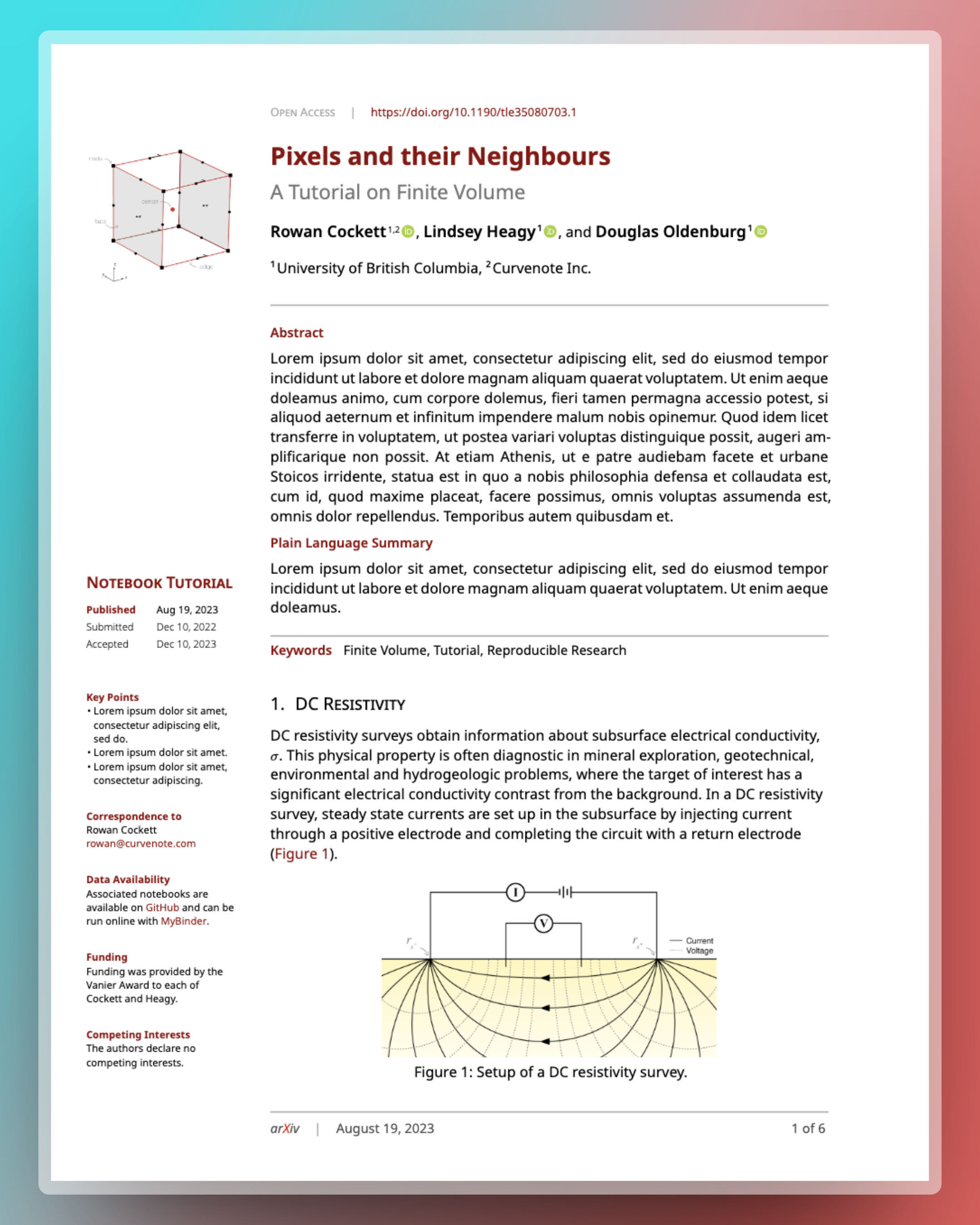
Replace Word’s manual formatting with Quarto

  • Integrates code, references, and figures
  • Produces submission-ready documents
  • One click → Word, PDF, or LaTeX output
  • Interactive with AI natively

by LaPreprint

Reproducible Research 🔁

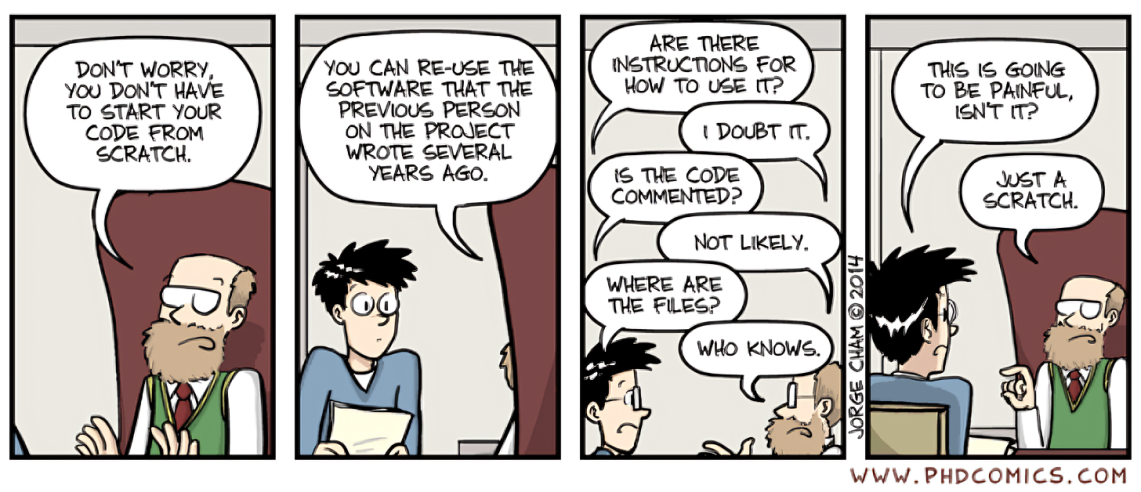
  • Many published papers are hard to reproduce
  • Learn Git & GitHub for version control
  • Track changes, back up, and collaborate
  • Your future self will thank you!

PhD comics by Jorge Cham

AI for Research 🤖

  • AI is becoming essential for modern research
  • We’ll cover how to use AI tools effectively in your workflow
  • Learn to leverage AI for coding, writing, and data analysis
  • The goal: AI as your research accelerator, not a crutch

Course Plan

Topics Overview

Block Topics
R Basics R/RStudio/Positron, data types, vectors, tibbles
ggplot2 Grammar of graphics, scatter plots, themes
Data Viz Amounts, distributions, trends, associations
Data Wrangling Verbs, of wrangling data
Colors & Design Color theory, good plot design
Programming Function, vectorization
Speed Fast code, parallel computing
Writing Quarto, scholarly writing

Attendance Policy 🏛️

  • No attendance requirement: You manage your own time
  • Zoom option available: Join remotely if you prefer
  • Live participation is always encouraged!

Late Policy: “Life Happens” Pass

We know that emergencies or burn-out can happen. You get one automatic late pass for the quarter.

  • Use it for any reason, no questions asked.
  • Extends your deadline by 7 days (to the following Sunday).
  • No emails required — just submit by the extended date on BruinLearn.
  • Beyond your single pass, we generally cannot accept late submissions.

AI Policy for Problem Sets 🚫🤖

  • No AI allowed on Problem Sets
  • PSets are designed to build your understanding
  • If AI writes your code, you learn nothing
  • We will teach you how to use AI — but the PSets test you

What We Won’t Cover

  • ❌ Advanced statistics & machine learning
  • ❌ Writing R packages
  • ❌ High-performance computing / big data
  • ❌ Building personal websites
  • ❌ Other programming languages (Python, Julia)

But all of these are great next steps after this course!

Summary

  • Computing skills are essential for modern ecologists
  • This course builds your skills step by step
  • AI is a tool — you need to understand what it does
  • By the end: R, ggplot2, data wrangling, Quarto, Git